Software development has changed dramatically over the past few years. Developers once spent hours searching documentation, debugging code, writing repetitive functions, and switching between multiple tools to complete a single task. Today, a new type of technology is changing that workflow: AI coding agents.
Unlike traditional code completion tools that simply suggest the next line of code, AI coding agents can understand tasks, write code, fix bugs, explain logic, generate tests, and even help manage entire development workflows.
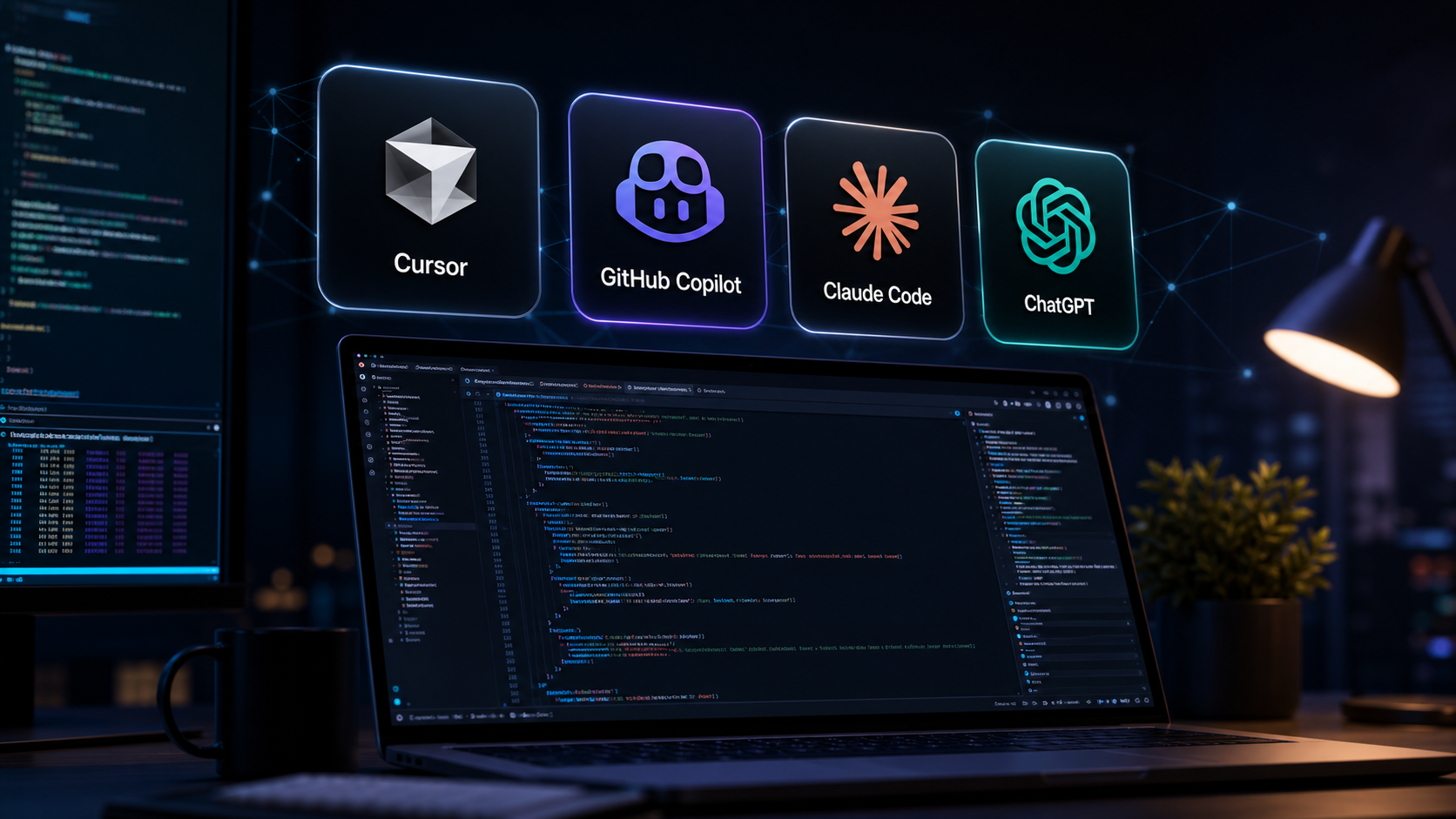
Tools such as Cursor, GitHub Copilot, Claude Code, and ChatGPT are becoming part of many developers' daily routines. They are no longer just assistants. They are evolving into development partners.
This shift is not about replacing developers. Instead, it is about helping developers work faster, focus on higher-value tasks, and spend less time on repetitive work.
What Are AI Coding Agents?
An AI coding agent is a software assistant powered by large language models that can understand programming tasks and help developers complete them.
Traditional autocomplete tools predict the next few words or lines of code. AI coding agents go much further. They can generate complete features, explain existing code, debug issues, create unit tests, refactor code, write documentation, analyze project structures, and suggest improvements.
Think of them as a highly knowledgeable teammate that is available whenever you need help.
Why Developers Are Adopting AI Coding Agents
The biggest reason is simple: productivity. Developers spend a significant amount of time on repetitive tasks, and AI coding agents help reduce that burden.
How AI Coding Agents Fit Into Modern Development Workflows
The role of a developer is evolving. Instead of writing every line manually, developers increasingly guide AI systems to generate solutions.
Planning
A developer can describe a feature and ask the AI to break it into tasks. For example, a request to build a customer feedback system for an e-commerce platform can become a database schema, API endpoints, frontend components, testing requirements, and deployment considerations.
Coding
Once planning is complete, AI agents help generate code. Developers can request new features, API integrations, database queries, and UI components. Rather than starting with a blank file, developers start with a working foundation.
Testing
Testing is often delayed because writing tests takes time. AI agents can automatically generate unit tests, integration tests, and edge-case scenarios, which encourages better software quality without increasing workload significantly.
Documentation
Documentation is important but often neglected. AI coding agents can create API documentation, README files, technical explanations, and deployment guides. This improves collaboration across teams.
Challenges and Limitations
AI coding agents are powerful, but they are not perfect. Developers must understand their limitations.
Generated code can be incorrect. AI may produce code that appears correct but contains hidden bugs, so every output should be reviewed before deployment.
Security risks still matter. Generated code may introduce vulnerabilities if it is not carefully validated, and security reviews remain essential.
Some AI systems may not always use the latest framework versions or best practices. Developers should verify recommendations against official documentation.
Best Practices for Working With AI Coding Agents
To get the most value, developers should treat AI agents as collaborators rather than replacements.
Be specific. The quality of results often depends on the quality of instructions. A precise request with framework, authentication, validation, and database requirements will produce a better starting point than a vague request.
Review everything. Read generated code, run tests, verify security, and validate business requirements before shipping anything.
The Future of AI Coding Agents
AI coding agents are still in the early stages of adoption. Future agents will likely understand entire codebases more deeply, manage multi-step development tasks, automate complex testing workflows, assist with deployments, and monitor applications after release.
The relationship between developers and AI will become increasingly collaborative. Instead of writing every line manually, developers will spend more time defining goals, reviewing solutions, and making strategic decisions.
The most successful developers will not be those who compete with AI. They will be those who learn how to work alongside it effectively.
Conclusion
AI coding agents are reshaping how software is built. They reduce repetitive work, accelerate development, and provide instant assistance across a wide range of programming tasks.
However, their true value is not in replacing developers. Their value lies in enhancing developer productivity and allowing engineers to focus on creativity, problem-solving, and innovation.
As these tools continue to improve, developers who learn to collaborate effectively with AI will gain a significant advantage. The future of software development is not human versus AI. It is humans and AI building better software together.